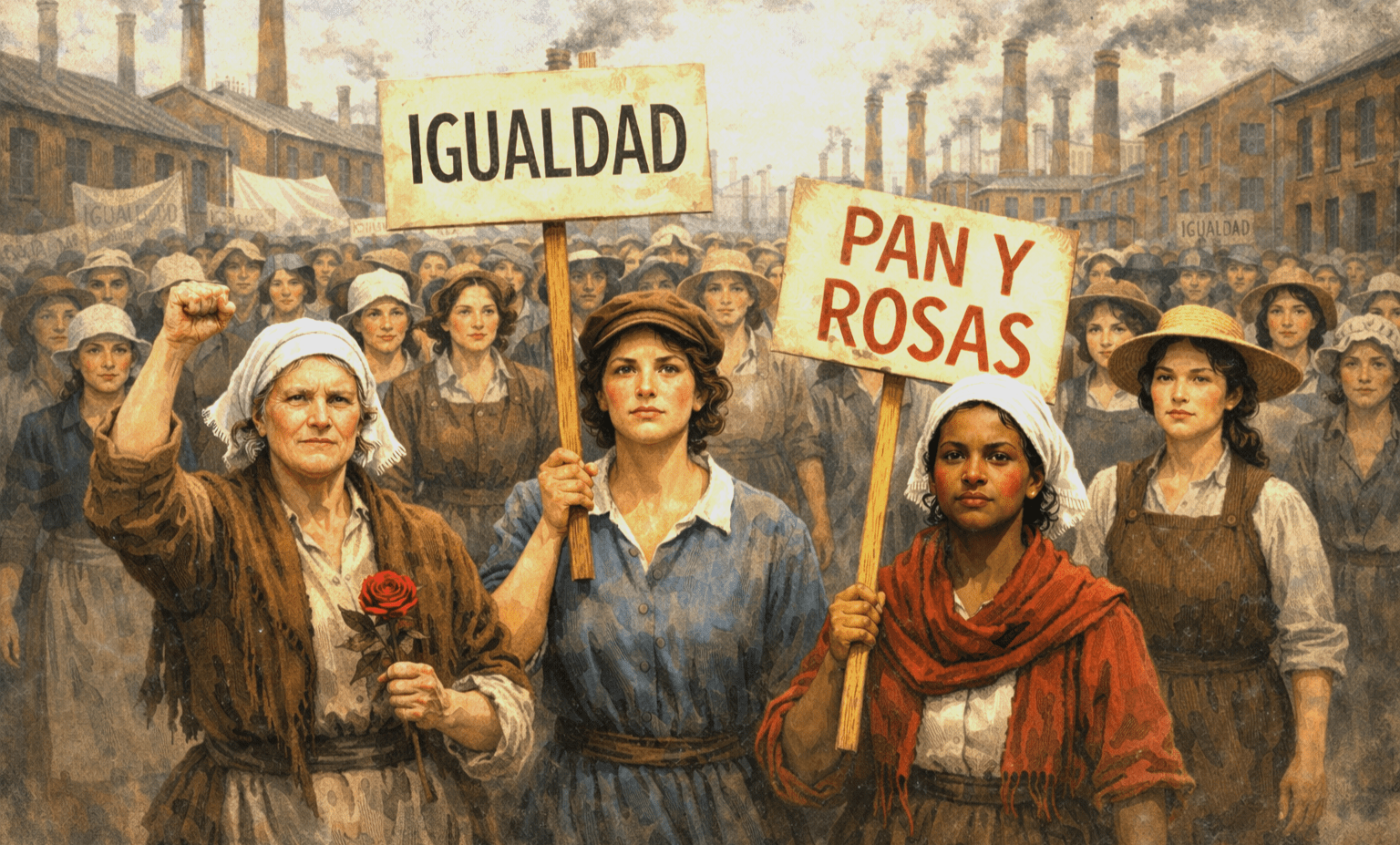
Ancient Roots of 8M: Tracing the Enduring Fight for Equality
International Women's Day, celebrated globally on March 8th (8M), is more than just a modern commemoration; it is a profound echo of centuries of relentless struggle. While many associate 8M with 20th-century labor movements and calls for suffrage, the true Historia Del 8 De Marzo stretches back much further, revealing a continuous, multi-secular fight by women to participate in society on equal footing with men. From the symbolic defiance of ancient Greek theatre to the revolutionary streets of Paris, the quest for justice, peace, and development has been woven into the fabric of women's history.
Understanding the deep historical roots of this significant day helps us appreciate the resilience, courage, and unwavering spirit of women who have dared to challenge the status quo across millennia. It reminds us that every step towards gender equality is built upon the foundational efforts of those who came before, making the celebration of 8M not just a reflection on progress, but a renewed commitment to the ongoing journey.
The Echoes of Antiquity: Lysistrata and Early Forms of Protest
To truly grasp the Historia Del 8 De Marzo, one must journey back to ancient Greece, a civilization often hailed as the cradle of democracy, yet one that notoriously relegated women to a secondary, often voiceless, status. It is within this context that Aristophanes' satirical play, Lysistrata, written in 411 BCE, emerges as a fascinating, albeit fictional, precursor to organized female protest. Lysistrata, an Athenian woman, devises a radical plan to end the Peloponnesian War: she convinces the women of Greece to withhold sexual privileges from their husbands until peace is declared. This "sex strike" serves as a powerful metaphor for women's collective power and their potential to influence societal outcomes when united.
While a comedic play, Lysistrata resonates deeply with the spirit of 8M by highlighting several timeless themes:
- The power of collective action: Lysistrata's success hinges on the solidarity of women from various city-states, demonstrating that unity can challenge even the most entrenched patriarchal systems.
- Women's agency, even in limitation: Despite being largely confined to the domestic sphere, Lysistrata finds a unique leverage point—one that impacts men directly—to push for a political agenda.
- A cry for peace: At its heart, the play is an anti-war statement, linking women's desire for peace and the protection of their families to political action, a theme that remains central to many feminist movements.
Although ancient Greek women lacked formal political rights or avenues for protest, Lysistrata offers a glimpse into an imagined world where their collective will could indeed force change. It symbolizes an early recognition, even if fictional, of women as crucial, albeit often unacknowledged, stakeholders in society. It's a reminder that the seeds of resistance were sown long before modern feminism took root, influencing the long and complex Historia Del 8 De Marzo.
Revolutionary Ideals and Women's Demands: The French Revolution
Centuries later, the ideals of "liberty, equality, and fraternity" ignited the French Revolution (1789-1799), promising a radical reshaping of society. Yet, as the revolution unfolded, it became clear that these lofty principles were not universally applied. Parisian women, instrumental in many aspects of the revolution, quickly recognized that their struggle for rights was far from over. Their participation in key events, such as the famous March on Versailles in October 1789, was a pivotal moment in the longer Historia Del 8 De Marzo.
Thousands of working-class women, many from the marketplaces of Paris, marched to Versailles, demanding bread from King Louis XVI and Queen Marie Antoinette. Their protest transcended mere sustenance; it symbolized their burgeoning political consciousness and their demand for direct accountability from their rulers. They also sought broader civil and political rights, including access to education, divorce rights, and the right to own property – aspirations that would later fuel the suffrage movements. Key figures like Olympe de Gouges, who penned the Declaration of the Rights of Woman and the Female Citizen in 1791, boldly asserted that "Woman is born free and remains equal to man in rights." While de Gouges and others faced brutal repression and even execution for their radical ideas, their actions solidified the notion that revolutionary change must include women's emancipation.
The French Revolution, therefore, laid crucial groundwork, demonstrating that:
- Women are not passive recipients of political change but active agents capable of demanding their rights.
- The fight for "equality" is often incomplete if it does not explicitly include women.
- The courage to march, speak out, and organize against injustice is a powerful tool for social transformation.
These early revolutionary acts of demanding political agency and social justice directly prefigure the spirit and objectives of International Women's Day, illustrating how the Historia Del 8 De Marzo is intertwined with global movements for human rights.
The Slow March Towards Suffrage: A Global Movement
The spirit of protest exemplified by Lysistrata and the Parisian revolutionaries continued to simmer, eventually boiling over into organized movements across the globe, most notably the fight for women's suffrage. The 19th and early 20th centuries witnessed an unprecedented global mobilization of women demanding the right to vote – a fundamental political right that would pave the way for greater participation in public life. This era is crucial in understanding the modern Historia Del 8 De Marzo, as it directly led to the establishment of Women's Day.
The journey was arduous and multifaceted:
- Seneca Falls Convention (1848, USA): Considered the first women's rights convention in the United States, it produced the "Declaration of Sentiments," outlining a list of grievances and demands, including women's suffrage.
- The Suffragettes (UK): Led by figures like Emmeline Pankhurst, these activists employed increasingly militant tactics, including public demonstrations, hunger strikes, and civil disobedience, to pressure the government.
- Global Expansion: From New Zealand granting women the vote in 1893 to various European nations and eventually the United States (1920) and beyond, the movement slowly but surely gained traction across continents.
The struggle was often met with fierce opposition, ridicule, and violence. Yet, the persistent advocacy of suffragists, through petitions, speeches, parades, and direct action, eventually broke down barriers. These movements were not only about the ballot box; they were about recognizing women's intellectual capabilities, their right to self-determination, and their role as full citizens. They understood that political power was essential for achieving broader social and economic equality. This long-fought battle for political recognition is directly linked to the genesis of International Women's Day as a day to recognize women's contributions and continue the fight for their rights. For a deeper dive into how this global struggle shaped the modern observance, explore The Global Struggle: Decoding the History of International Women's Day.
Beyond the Ballot Box: Expanding the Fight for Equality
While the achievement of suffrage was a monumental victory in the Historia Del 8 De Marzo, it quickly became clear that voting rights alone would not dismantle all forms of gender inequality. The early 20th century saw the emergence of socialist feminist movements that linked women's oppression to economic exploitation and class struggle. It was within this context that the idea of an International Women's Day took concrete form, originating from socialist women's conventions in the early 1900s, demanding better working conditions, equal pay, and an end to discrimination.
The very first National Woman's Day was observed in the United States on February 28, 1909, organized by the Socialist Party of America. This was followed by the first International Women's Day, celebrated on March 19, 1911, in Austria, Denmark, Germany, and Switzerland, primarily focusing on women's right to work, vocational training, and an end to discrimination on the job. The move to March 8th, while connected to specific labor events and protests, solidified as the internationally recognized date due to various historical convergences, including women's protests in Petrograd (now St. Petersburg) in 1917, which sparked the Russian Revolution.
The subsequent decades saw the scope of 8M expand far beyond suffrage and labor rights. It evolved to encompass demands for:
- Reproductive rights: Control over one's body and reproductive choices.
- Equal pay and economic justice: Addressing the gender pay gap and promoting economic empowerment.
- An end to gender-based violence: Combating domestic violence, sexual assault, and harassment.
- Representation in leadership: Advocating for women's presence in politics, business, and other decision-making roles.
- Intersectionality: Recognizing that women's experiences are shaped by race, class, sexuality, and other identities, and that true equality requires addressing multiple forms of discrimination.
These evolving demands underscore that the fight for equality is continuous and adapts to new challenges. The Historia Del 8 De Marzo is a dynamic narrative, constantly being written by activists and advocates striving for a more just world. For insights into the ongoing relevance and deeper meaning of this enduring struggle, consider reading Years of Fight: The Enduring Meaning of Women's Day.
Conclusion: A Legacy of Unwavering Resolve
The journey from Lysistrata's symbolic protest to the global observance of 8M is a testament to the enduring human spirit and the unwavering resolve of women throughout history. The Historia Del 8 De Marzo is not a static narrative; it is a vibrant tapestry woven with countless acts of defiance, courage, and solidarity. From ancient Greek stages to revolutionary streets and the modern digital sphere, women have consistently pushed the boundaries of their prescribed roles, demanding respect, justice, and full participation in society. By understanding these ancient roots and revolutionary struggles, we gain a deeper appreciation for the progress made and a clearer perspective on the work that still lies ahead. 8M stands as a powerful reminder that the fight for equality is a continuous journey, honoring the past while inspiring future generations to build a world where liberty, equality, and fraternity are truly for all.